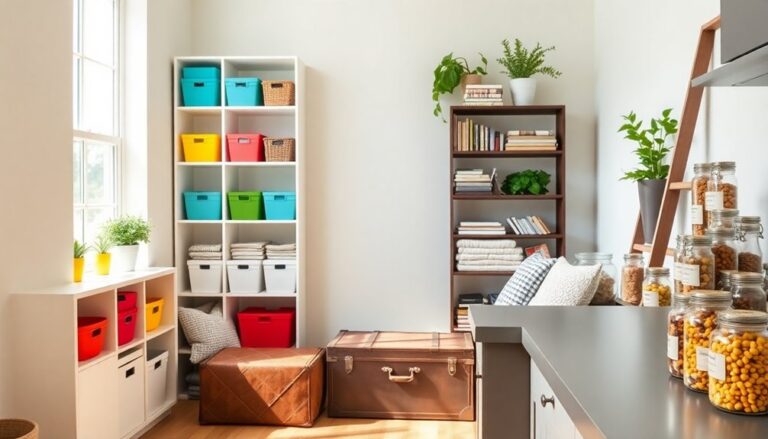




Smart design choices can greatly improve small spaces by embracing multi-functional furniture and utilizing vertical space. Incorporating innovative storage solutions and creating zones with area rugs can boost functionality. Light colors and reflective surfaces enhance brightness, whereas mirrors offer depth. Maximizing natural light additionally plays a key role in making spaces feel larger. Personal touches with decorative accents can add personality. By exploring these strategies, one can discover even more ways to transform compact areas into stylish, efficient environments.
Article Highlights
- Embrace multi-functional furniture like convertible sofas and coffee tables to optimize utility and reduce clutter in small spaces.
- Utilize vertical space with custom shelving and wall-mounted desks to maximize storage without occupying floor area.
- Create zones within small areas using rugs and strategic lighting to enhance functionality and define activities.
- Incorporate reflective materials and layered lighting techniques to amplify brightness and create an inviting atmosphere.
- Personalize your space with decorative touches like artwork and unique accents to reflect individuality without overwhelming the area.
Embrace Multi-Functional Furniture
When living in a small space, it's essential to make every square foot count, and embracing multi-functional furniture can be a transformative factor. Innovative space-saving designs allow homeowners to maximize their surroundings without sacrificing style. Convertible pieces, such as sofa beds and expandable dining tables, adapt to various needs throughout the day, seamlessly merging function with aesthetics. For instance, a coffee table that doubles as storage can reduce clutter while providing a chic focal point. This approach not only improves functionality but also encourages a minimalist lifestyle, where each item serves a purpose. By thoughtfully selecting multi-functional furniture, individuals can create a harmonious living environment that feels spacious and inviting, proving that smart design choices can certainly revolutionize small spaces.
Utilize Vertical Space
Incorporating multi-functional furniture is just one strategy for maximizing small spaces; utilizing vertical space is equally important. By drawing the eye upward, individuals can create a sense of openness as well as adding functionality.
- Custom shelving systems for books and decor
- Floating shelves to display plants and personal items
- Wall-mounted desks that save floor space
- Vertical gardens for a touch of nature
- Innovative wall art that doubles as storage
These elements not merely improve aesthetics but also reveal the potential of every square inch. By prioritizing vertical design, people can transform cramped areas into stylish, efficient environments that reflect their unique tastes and lifestyles. Embracing verticality leads to both innovation and practicality.
Implement Smart Storage Solutions
To maximize small spaces, smart storage solutions are crucial. By incorporating multi-functional furniture and utilizing vertical space effectively, individuals can create a more organized and spacious environment. These strategies not merely improve functionality but additionally add style to limited areas.
Multi-Functional Furniture Options
Although many people struggle with limited space, multi-functional furniture can transform a cramped area into a highly efficient living environment. By incorporating innovative designs, homeowners can maximize utility without sacrificing style. Consider these versatile options:
- Space saving sofas that double as storage
- Convertible coffee tables that expand for gatherings
- Expandable dining tables for unexpected guests
- Modular shelving that adapts to any room
- Wall mounted desks that free up floor space
These designs create room for creativity as they address functionality. Items like foldable chairs and dual purpose beds improve adaptability, whereas ottoman storage and nesting furniture offer hidden storage solutions. Embracing multi-functional pieces allows for a dynamic living experience, turning small spaces into comfortable, stylish sanctuaries.
Vertical Space Utilization Techniques
Though maximizing small spaces can be challenging, utilizing vertical space through smart storage solutions can make a significant difference. Embracing innovative design elements like wall-mounted shelves and tall bookcases offers a stylish way to store items while freeing up floor space. Ladder shelves provide a chic display for books and decor, while pegboard organizers improve functionality in kitchens or workspaces. Hanging planters and vertical gardens add greenery without consuming precious ground area. Moreover, foldable tables can be stored away when not in use, maximizing utility. Incorporating wall art can raise the aesthetic without sacrificing space.
| Storage Solution | Benefits | Ideal Use |
|---|---|---|
| Wall Mounted Shelves | Saves floor space | Living rooms, kitchens |
| Pegboard Organizers | Customizable storage | Workshops, craft areas |
| Ladder Shelves | Stylish display option | Bedrooms, offices |
Create Zones With Area Rugs
When trying to maximize small spaces, creating distinct zones with area rugs can be a transformative element. The zone definition comes into play as rugs delineate areas for different activities, allowing for a more functional and inviting atmosphere. By incorporating rug layering, individuals can add depth and style, simultaneously establishing clear boundaries.
- A plush rug in the living area for relaxation
- A patterned runner in the kitchen for a lively touch
- A soft, textured rug under the dining table for comfort
- A bold rug in the workspace to inspire creativity
- A neutral rug in the bedroom to promote tranquility
These choices not just improve aesthetic appeal but also contribute to a cohesive design that maximizes every square foot.
Choose Light Colors and Reflective Surfaces
Choosing light colors and incorporating reflective surfaces can considerably improve the perception of space in small areas. By opting for light color palettes, one can create an airy, open atmosphere that makes a room feel larger than it is. Soft whites, pale blues, and gentle pastels bounce light around, enhancing the sense of spaciousness. Moreover, integrating reflective materials—like glossy finishes, metallic accents, or glass elements—further amplifies this effect. These surfaces catch and distribute light, adding depth and dimension to the environment. Together, light colors and reflective surfaces not only beautify a space but transform its overall functionality, making it an innovative solution for maximizing small living areas. Embracing these design choices can truly uplift any compact space.
Incorporate Mirrors for Depth
Incorporating mirrors can greatly improve the perception of space in small areas. By using reflective surfaces, one can create an illusion of depth, making a room feel larger and more open. Strategic placement of mirrors not only expands the space but furthermore improves lighting by bouncing natural light around the room.
Reflective Surfaces Expand Spaces
In any small space, reflective surfaces can work wonders to create an illusion of depth and openness. By cleverly integrating these elements, one can improve the overall aesthetic and functionality of the area. Here are some innovative ways to incorporate reflective surfaces:
- Mirrored furniture that bounces light and visually expands the room
- Reflective wallpaper with subtle patterns for a sophisticated touch
- Glass accents that provide transparency and airy vibes
- Decorative mirrors strategically placed to amplify natural light
- Polished surfaces on tables and shelves that improve brightness
Utilizing such design choices not just boosts the visual appeal but also creates a sense of spaciousness, making even the coziest of areas feel more expansive and inviting.
Strategic Placement Techniques
One effective way to improve the perception of space is through the strategic placement of mirrors. By reflecting light and creating depth, mirrors can transform small areas into visually expansive environments. When integrated into a strategic furniture arrangement, they augment spatial flow optimization, making the layout feel more open and inviting. For instance, positioning a large mirror across from a window not only amplifies natural light but furthermore draws the eye outward, creating an illusion of greater distance. Moreover, smaller mirrors can be clustered on walls to maximize impact without overwhelming the space. This innovative approach can effectively redefine how one experiences a room, allowing for multifunctional living without sacrificing style or comfort.
Lighting Enhancements Through Reflection
Though many overlook the influence of lighting in small spaces, using mirrors for reflection can greatly improve the overall ambiance. By strategically placing mirrors, one can boost light diffusion and create an enchanting brightness balance. This innovative approach allows for an ambient glow that enriches the environment as it manipulates color temperature for warmth or coolness.
Consider these elements for ideal effect:
- Reflective materials that amplify light from fixtures
- Shadow play to add depth and intrigue
- Light layering techniques for dynamic illumination
- Strategic mirror placement to draw the eye
- Design cohesion that harmonizes with existing decor
Incorporating these elements transforms small spaces into inviting, well-lit sanctuaries.
Optimize Natural Light
When optimizing natural light in small spaces, strategic choices can make a significant difference. Designers recommend using large windows or glass doors to improve daylight optimization, allowing sunlight to flood in. Incorporating skylights can further boost this effect, creating a brighter, more open atmosphere. Light-colored walls and reflective surfaces can likewise help bounce natural light around, making the space feel larger and more inviting. Minimalist furniture with transparent elements, like acrylic or glass, can reduce visual clutter while maximizing the impact of incoming light. Moreover, avoiding heavy drapes in favor of sheer curtains can maintain privacy without sacrificing brightness. By embracing these innovative design strategies, one can transform a compact area into a luminous haven.
Personalize With Decorative Touches
To create a truly inviting atmosphere in small spaces, adding personalized decorative touches is essential. These accents not only express individuality but likewise improve the overall aesthetic. Innovative homeowners can transform their compact areas with unique elements that reflect their personality.
Some inspiring ideas include:
- Framed personalized artwork that showcases memories or creativity
- Colorful throw pillows that add texture and warmth
- Stylish wall decals for a playful yet sophisticated vibe
- Handcrafted decorative accents that tell a story
- Unique lighting fixtures to set the mood and draw attention
Frequently Asked Questions
How Can I Choose the Right Furniture for My Small Space?
When selecting furniture for a small space, one might consider that nearly 50% of urban dwellers live in homes under 600 square feet. To make the most of limited areas, it's crucial to prioritize multi-functional furniture, like a sofa bed or an ottoman that doubles as storage. Space-saving solutions, such as wall-mounted shelves or foldable tables, offer innovative ways to maximize functionality without sacrificing style or comfort in compact living environments.
What Are the Best Ways to Maintain a Clutter-Free Small Space?
To maintain a clutter-free small space, one must embrace innovative storage solutions and adopt a minimalist mindset. By prioritizing multifunctional furniture and vertical storage, they can maximize available space. Regularly decluttering and evaluating items guarantees only necessities remain. Utilizing decorative boxes or hidden compartments adds style as well as keeping chaos at bay. This approach not only improves visual appeal but also nurtures a serene environment, making small living areas feel more expansive and organized.
How Do I Balance Style and Functionality in Small Spaces?
In the domain of design, balancing style and functionality in small spaces is akin to crafting a delicate dance. One must embrace color schemes that evoke harmony as one selects multi-purpose solutions that seamlessly blend beauty and practicality. It's about creating an oasis where every piece tells a story without overwhelming the senses. By thoughtfully choosing versatile furnishings and harmonious palettes, one can transform a compact area into a stylish sanctuary that thrives on innovation.
What Are Some Common Mistakes to Avoid in Small Space Design?
In small space design, it is crucial to avoid common mistakes like overcrowded layouts and poor lighting. Overcrowding can make a room feel cramped and uninviting, whereas inadequate lighting can diminish its perceived size and warmth. Instead, they should focus on creating a balanced flow with multifunctional furniture and strategic light placement. By steering clear of these pitfalls, one can achieve a stylish, innovative space that feels both functional and inviting.
How Can I Incorporate Plants in a Small Living Area?
In a small living area, the challenge of incorporating plants can feel intimidating. Yet, with creativity, it's entirely achievable. She discovered hanging planters that dangle from ceilings, adding a whimsical touch without consuming floor space. Vertical gardens lined against walls transformed her space into a lush retreat. With a few innovative choices, she turned her once-empty corners into lively green havens, proving even the tiniest area can thrive with life and beauty.