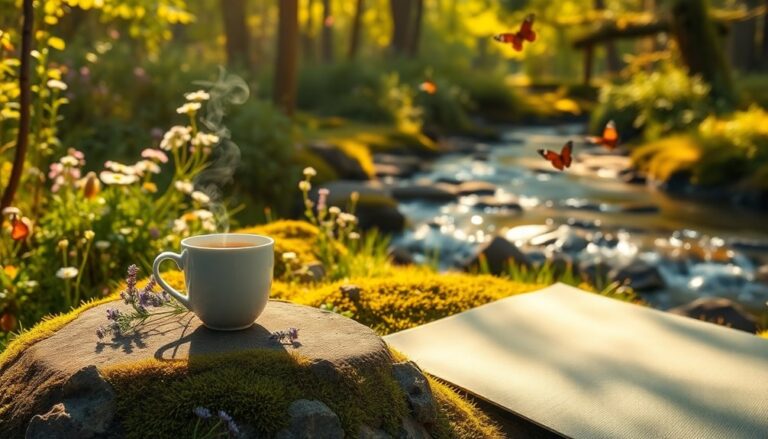




To reduce stress and lead a healthier life, try mindfulness meditation, which encourages inner peace. Engage in physical exercise like cardio to boost your mood through endorphin release. Incorporate deep breathing techniques for instant calm and clarity. Spend time in nature, as it promotes wellness and mindfulness. Don't forget about healthy eating habits: nourish your body with balanced foods to combat stress. There are more techniques to explore that can improve your well-being even further.
Article Highlights
- Practice mindfulness meditation daily to cultivate inner peace and enhance emotional well-being.
- Engage in regular physical exercise to release endorphins and boost mood.
- Utilize deep breathing techniques for instant calm and reduced anxiety in stressful situations.
- Spend time in nature to lower stress levels and promote a sense of wellness.
- Adopt healthy eating habits, focusing on nutrient-dense foods to combat stress and improve mood.
Mindfulness Meditation for Inner Peace
Even though life can often feel overwhelming, practicing mindfulness meditation can help you cultivate a sense of inner peace. By dedicating just a few minutes each day to this practice, you can experience significant mindfulness benefits that not only improve your well-being but also enable you to serve others more effectively. Start with simple meditation practices, such as focusing on your breath or observing your thoughts without judgment. As you develop this skill, you'll find yourself more present and compassionate, allowing you to connect deeply with those around you. Embracing mindfulness can lead to a calmer mind and a more open heart, making it easier to support loved ones and contribute positively to your community.
Physical Exercise to Boost Mood
When you're feeling down, incorporating physical exercise into your routine can greatly boost your mood. Whether you're helping yourself or others, physical activity serves as a strong tool for emotional uplift.
Consider these engaging options:
- Cardio workouts: Feel the rush of endorphins as you run, cycle, or dance—energizing not just your body but also your spirit.
- Strength training: Lifting weights not just builds muscle but also nurtures a sense of accomplishment, boosting your self-esteem.
- Group classes: Join others in a fun atmosphere; the camaraderie and support can enhance your mood as you all work toward your fitness goals.
Deep Breathing Techniques for Instant Calm
If you ever find yourself overwhelmed, deep breathing techniques can provide instant calm and clarity. By practicing breath awareness and diaphragmatic breathing, you can ground yourself and reduce stress. Here's a simple table to guide you through effective techniques:
| Technique | Steps | Benefits |
|---|---|---|
| Diaphragmatic Breathing | Inhale deeply through your nose, filling your belly. Exhale slowly through your mouth. | Reduces anxiety and promotes relaxation. |
| 4-7-8 Breathing | Inhale for 4 seconds, hold for 7, and exhale for 8. | Calms the mind and improves sleep. |
| Box Breathing | Inhale for 4, hold for 4, exhale for 4, hold for 4. | Improves focus and lowers stress. |
Try these techniques whenever stress arises, and you'll find a greater sense of peace.
The Power of Nature and Outdoor Activities
Spending time in nature can do wonders for your stress levels. Whether it's a walk in the park or a hike in the mountains, outdoor activities boost your mood and overall wellness. Let's explore how connecting with the great outdoors can improve your mental health.
Benefits of Nature Exposure
Though modern life often keeps you indoors, the benefits of nature exposure are too significant to overlook. Engaging with green spaces can be a form of nature therapy, improving your mental well-being as it offers a serene escape. Envision:
- The gentle rustle of leaves as you stroll through a forest.
- The lively colors of wildflowers swaying in the breeze.
- The soothing sounds of a nearby stream flowing over smooth stones.
These experiences not merely reduce stress but additionally promote mindfulness, allowing you to connect with the world around you. By embracing nature, you can cultivate compassion and a deeper appreciation for life, eventually serving others better. So, step outside and let the healing strength of nature rejuvenate your spirit and improve your ability to support those you care about.
Outdoor Activities for Wellness
Outdoor activities offer a lively way to improve your well-being, utilizing the rejuvenating strength of nature. Engaging in hiking trails or nature walks not just gets you moving but also connects you with the environment, cultivating a sense of peace. Outdoor yoga can improve your mindfulness while allowing you to soak up the sun. Consider participating in gardening activities, which promote relaxation and nurture growth—both in plants and yourself. Team sports encourage camaraderie and shared joy, strengthening bonds with others. Adventure outings and cycling routes add excitement to your routine, whereas beach excursions offer serenity and a revitalizing escape. By embracing these activities, you not only uplift yourself but also inspire those around you to prioritize their wellness.
Healthy Eating Habits to Combat Stress
As you navigate the challenges of daily life, nourishing your body with healthy foods can greatly reduce stress levels. By focusing on nutrient balance and incorporating meal prepping into your routine, you can create meals that energize you and promote calmness.
Consider these stress-busting food options:
- Leafy greens: Packed with vitamins and minerals, they help support your body's stress response.
- Whole grains: Rich in fiber, they stabilize blood sugar and provide lasting energy.
- Omega-3 rich foods: Such as salmon or walnuts, they help reduce anxiety and improve mood.
Building a Supportive Social Network
Nourishing your body is just one part of managing stress; having a strong social network plays a significant role too. When you cultivate friendship connections, you create a safety net that can help you navigate life's challenges. Surrounding yourself with supportive individuals not only uplifts your spirit but additionally allows you to share your burdens. Engaging in community support through volunteering or local events can deepen these bonds, providing both you and others with a sense of belonging. Remember, it's about giving and receiving; as you lift others, you'll find your own stress levels decrease. So reach out, nurture those connections, and watch how they enrich your life, making stress feel more manageable and less isolating.
Frequently Asked Questions
How Long Does It Take to See Results From Stress Relief Techniques?
When you start using stress relief techniques, the results timeline can vary. Typically, you might notice improvements within a few weeks, especially if you're consistent. Nevertheless, the stress duration you've been experiencing can affect how quickly you see changes. It's important to be patient and give yourself grace as you explore what works best for you. Remember, every small step you take contributes to a more peaceful mindset and helps you serve others better.
Can Stress Relief Techniques Be Used During a Busy Workday?
You're in the midst of a hectic workday, deadlines looming and stress mounting. But wait—there's hope. Yes, you can absolutely incorporate stress relief techniques right at your desk. Take a moment for mindful breathing, inhaling deeply and exhaling slowly to regain focus. Pair that with some desk stretches to release tension. These small practices not just refresh your mind but additionally empower you to serve others with renewed energy and clarity.
Are There Any Side Effects From Practicing Mindfulness Meditation?
Though mindfulness meditation offers many benefits, like improved focus and reduced anxiety, it can have some drawbacks. You might experience frustration if your mind wanders or discomfort during long sessions. It's additionally possible to feel overwhelmed by emotions that arise. Nevertheless, don't let these discourage you! Embracing mindfulness with a compassionate approach can help you navigate these challenges, enhancing your ability to serve others as you cultivate your own well-being.
What Are Some Quick Stress Relief Techniques for Emergencies?
When you're in an emergency and stress hits, quick mindfulness can be a lifesaver. Try simple breathing exercises: take a deep breath in for four counts, hold for four, then exhale for four. Repeat this a few times, and you'll feel tension ease. You can as well focus on your surroundings, identifying five things you can see, hear, or touch. These techniques can help you regain calm and be more present for those you're serving.
How Do I Choose the Right Exercise for Stress Relief?
Did you know that 30 minutes of exercise can reduce stress levels by up to 50%? To choose the right exercise for stress relief, consider your preferences. If you enjoy movement, cardio options like running or dancing can be invigorating. If you prefer building strength, strength training can likewise be a great outlet. Ultimately, it's about finding what resonates with you and helps you serve others by being your best self.